
Hospitals to recover from sluggish Q3; diagnostics' growth rate at pre-Covid levels.


Mixed earnings and not so encouraging macroeconomic data dented sentiment, Ajit Mishra, VP - Research, Religare Broking Ltd said. In twin blows to Indian economic revival, higher food prices drove retail inflation to a five-month high of 7.4 per cent, while factory output fell for the first time in 18 months. The second consecutive month of rise in consumer price index (CPI)-based inflation will add to the pressure on the Reserve Bank of India (RBI) to again raise interest rates to tame high prices. In the broader market, BSE Midcap declined 0.73 per cent while smallcap dropped 0.45 per cent.
The 30-share bluechip index is rebalanced on a semi-annual basis with next rejig slated for June 18.

Two firms belonging to the Adani group - India's most valued conglomerate - are part of the Nifty 50 index. The group, however, has no representation in the Sensex. And it could stay this way if a proposed index qualification rule change gets approved. Recently, Asia Index, a joint venture between S&P Dow Jones Indices and BSE responsible for index composition, floated a consultation paper where it proposed that a stock must have a derivative contract to be eligible for inclusion in the flagship 30-share Sensex index.
Pharmaceutical majors like Ranbaxy, Dr Reddy's Lab, Wockhardt, Glenmark and Sun Pharma are now treading a careful patent litigation path in the US market to expand their generic business instead of the aggressive patent challenges they pursued until a few years ago.

Key stock indices Sensex and Nifty declined over 1 per cent at close on Monday due to heavy selling in banking, auto and FMCG shares amid weak global market trends and continued foreign fund outflows. Reversing its previous session's gains, benchmark BSE Sensex tumbled 638.11 points or 1.11 per cent to settle at 56,788.81. During the day, it tanked 743.52 points or 1.29 per cent to 56,683.40. The broader NSE Nifty fell by 207 points or 1.21 per cent to end at 16,887.35 as 42 of its constituents declined.

If most of the top 10 Indian drug companies were less than Rs 500-crore (Rs 5-billion) turnover ones a decade earlier and were focused only on domestic business, now they are companies with annual businesses ranging from Rs 2,000-Rs 6,000 crore (Rs 20-60 billion) and with operations spanning 60-100 countries and employing 3,000-5,000 people.

An analysis of the growth rate of 15 leading drug companies for the third quarter of 2008-09 show excellent performances in domestic turf have been often marred by the poor show of their acquired assets.
According to analysts, Indian drug makers are forging alliances with overseas companies such as CD Pharma, Gnosis SpA, Crawford Healthcare and Syrio Pharma to sell drugs for chronic and acute cases. According to analysts, Indian drug makers are forging alliances with overseas companies such as CD Pharma, Gnosis SpA, Crawford Healthcare and Syrio Pharma to sell drugs for chronic and acute cases.
Dr Reddy's Laboratories, Jubilant Organosys, Orchid Chemicals, Aurobindo Pharma and Shasun Chemicals and Drugs are among those who have borrowed either to expand locally or to acquire companies abroad, but are now struggling to repay the dues, analysts say. Some of the companies' debt now exceeds their market capitalisation, as local and global investors sold stocks on concerns over slowdown and falling revenues. A few drug makers may be forced to sell assets to repay debt.
India's third-largest pharmaceutical company by revenue, Cipla, is up for grabs in a three-way fight between Torrent Pharmaceuticals, Dr Reddy's Laboratories (DRL) and private equity (PE) giant Blackstone. Analysts say it is more likely for a strategic investor like Torrent or DRL to acquire Cipla than a PE firm, which may not derive healthy returns at Cipla's current market price (CMP) after the recent gains.
Dr Reddy's has reached an out-of-court settlement to launch the Glaxo-patented Imitrex, a migraine drug that had annual sales of $878 million as of March 31, 2006, in the US. Experts estimate Dr Reddy's may not get more than $8-$15 million sales in 2009 since majority of sales revenue has to be given to GSK, for allowing the launch the authorised generic version.
Glenmark plans to start selling its anti-diarrhoea drug, Crofelemer, by the first-half of 2010 across the globe, except in North America, Europe, Japan and China, the company said. The confidence to sell the drug ahead of its rivals comes as the Crofelemer's original developer, Napo Pharmaceutical Inc, recently entered into a tie-up with a US-based drug maker, Salyx, for selling the drug in the US market, paving the way for Glenmark to sell it in the rest of the world.
Indian Pharma majors are looking at different strategies to boost their global business.
The Sensex plunged into the red after opening with a gain of 13 points at 7,693.

Indices reversed all its losses during late trades.
While the private companies have to spend Rs 8-12 crore (Rs 80 to Rs 120 million) on building and other infrastructure for each school, the government would provide 30-50 acre land free of cost to the developers of these schools.
Sun Pharmaceutical, which is growing its dermatology and ophthalmic specialty business in the US will spend $460 million on R&D.
Equity indices overcame a wobbly start to clock gains for the third session on the trot on Tuesday, propped up by banking, metal and energy stocks amid a mixed trend in global markets. A recovery in the rupee also bolstered sentiment, traders said. The 30-share BSE Sensex advanced 246.47 points or 0.45 per cent to settle at 54,767.62 after starting the trade on a weak note. In a volatile session, the benchmark hit a high of 54,817.52 and a low of 54,232.82 during the day.
The recent pullout by ICICI Venture and Citigroup Venture from a three-year-old drug discovery partnership with Dr Reddy's Laboratories points to angel investors' growing aversion to risk in pharma and biotech firms, say experts.
The National Pharmaceutical Pricing Authority has revised prices of 440 medicines. Around 300 medicines have seen price cuts, while the others have seen a hike, sources said. The extent of the revisions is not known as yet.
Ranbaxy Laboratories, Dr Reddy's, Nicholas Piramal and three other Indian drug companies cut their research costs by separating the units involved in developing new drugs, thereby addressing investor concerns on low operating margins.

'It will be interesting to see how Dr Patel handles gadflies with the maturity of egregiously petulant three year olds.' 'That Dr Patel does not, in so far as we can tell, cause society matrons to gush like hormonal teenagers can only be a good thing for him.' 'Look where their febrile imaginations and breathless prose took his predecessor.'
Cymbiotics, a US-based bio-pharmaceutical manufacturer, has entered into a joint in-licensing agreement with Elder Pharmaceuticals to manufacture and market three of its drugs for pain management, diabetes and dermatology in the Indian market.
Tata Consultancy Services along with Bharti Televentures and National Thermal Power Corp was on Friday adjudged among the best employers in India by leading global human resources management firm Hewitt Associates.
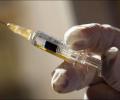
The parties intend to start the production of Sputnik V in the beginning of 2021, it added. Currently, Phase III clinical trials are approved and are ongoing in Belarus, the United Arab Emirates, Venezuela and other countries, as well as Phase II-III in India, RDIF said.
Ranbaxy Laboratories, Dr Reddy's Laboratories and Sun Pharma's US subsidiary Caraco Pharmaceuticals are among the 13 generic manufacturers to get first generic approvals from the US Food and Drug Administration to manufacture and market generic versi
The resultant price increase was the cause of a surprise upward variation in the "drug and medicines" segment of the weekly wholesale price index of the ministry of commerce and Industry last week, it is learnt.
In a continuing trend for the previous two quarters, foreign currency fluctuations and mark-to- market losses are affecting profits of India's drug makers, despite increase in net sales ranging between 4.5 and 42 per cent for most of the firms during the three-month period.

Axis Bank was the top gainer in the Sensex pack, surging around 5 per cent, followed by HDFC twins, ICICI Bank, Bajaj Finance and SBI. NSE Nifty zoomed 274.20 points to end at 14,982.
The move brings an additional 15 per cent of the retail medicine market worth over Rs 4,000 crore (Rs 40 billion) under direct price control. All domestic companies, including drug majors like Ranbaxy, Cipla, Lupin and Dr Reddy's, have syrups and tonics in their product portfolio.
Pharmaceutical major Matrix Laboratories, public sector oil producer Oil and Natural Gas Corporation and Ranbaxy Laboratories have emerged as the fastest, biggest and the most consistent wealth creators for year 2006

Companies asked to give data for three batches instead of one; move may lead to significant rise in development cost of generics
Sales growth of generics drugs has dropped to 3.6 per cent in the 12 months ended September 2008 compared with 11.4 per cent growth a year earlier, according to the latest report of IMS Health, the leading provider of market intelligence to the global pharmaceutical and healthcare industries. However, sales by volume increased by 5.4 per cent in the US, reflecting declining prices and fewer blockbusters losing patent protection in 2008.
Karmayog, a leading NGO which recently carried out a CSR rating of top 500 Indian companies, says that only two drug companies - Dr Reddy's and Lupin - have done work on this front. While the two firms scored three out of five, 30 other drug firms failed to perform satisfactorily. Nine of the companies, including leading ones such as Nicholas Piramal, Panacea and Glenmark did not score at all.

The domestic benchmark indices - the S&P BSE Sensex and the National Stock Exchange Nifty50 - had lost close to 1.5 per cent in three days recently before gaining slightly. Notwithstanding weakness and volatility, the Nifty50 has managed to hold on to the 18,000 mark, while the Sensex has managed to stay above the 61,000 level. The performance of the stocks that comprise these front-line indices remains polarised.
